The World Cup Needs Adaptive Autonomy
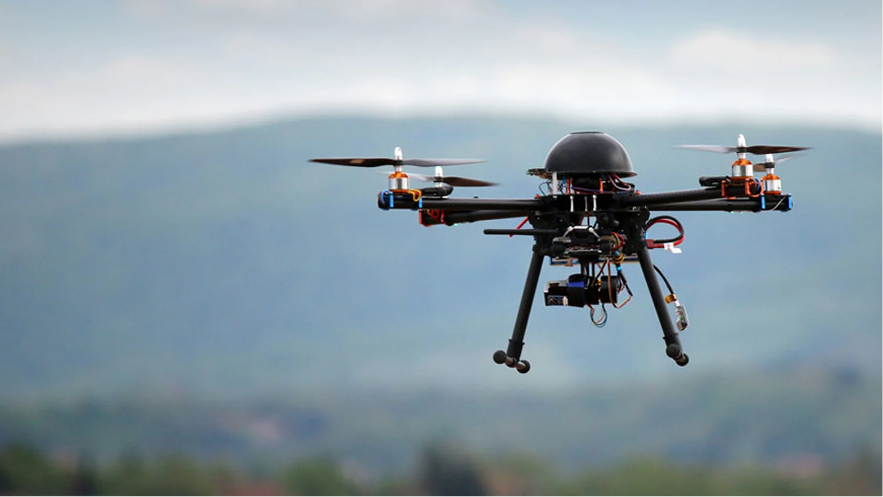
This summer, as fans pack stadiums across the country for the World Cup, FBI agents are running a quieter operation in the background: watching the skies. In Los Angeles alone, federal authorities intercepted at least 28 drones around SoFi Stadium in a single week. In Atlanta, 21 more. Across the tournament’s 78 matches, the pattern repeats in city after city, agents working command centers, racing to answer one question before it is too late: is this a malicious threat?
Every unauthorized drone requires a response. Most of the time, the pilots are usually hobbyists who inadvertently wander into restricted airspace, surprised when federal agents intercept them. But determining whether an incursion is accidental, reckless, or part of a deliberate attack is a far more difficult question, and one that must often be answered in seconds. Recent reporting on an alleged drone-based attack plot tied to a recent UFC event at the White House, underscores why that distinction matters.
The challenge is not a lack of detection. The technology already exists. RF sensors, radar, optical systems, and countermeasures are all commercially available and growing more advanced by the day. The challenge is rapidly building a shared understanding of what those detections mean, distinguishing between isolated incidents and coordinated activity, and enabling the right systems to respond together in real time.
At a single stadium, federal, local, and private security teams may operate separate systems, each with its own interface and view of the environment. Operators are left to manually reconcile alerts, track objects, and build a shared picture under time pressure. Every second spent stitching together that view is a second lost.
That delay may be manageable when the threat is a single drone. It breaks down when the threat is coordinated.
Consider a scenario where multiple drones approach from different directions at once. Some are distractions. One carries intent. Each system detects part of the activity. One flags movement at the perimeter. Another tracks altitude changes. A third identifies an object of interest. But those signals live in separate systems, owned by different teams, with no shared logic connecting them.
To the operator, it does not appear as a coordinated threat. It appears as a series of unrelated alerts. Time is spent reconciling, confirming, and cross-checking. By the time the full picture comes together, the window to respond may already be closing.
That is the failure mode a coordinated attack is designed to exploit. The gap is not sensing. It is the inability to interpret and act on those signals as a unified system.
What changes with coordinated autonomy is not just visibility, but behavior. Systems are no longer operating independently and waiting for human coordination. They are executing shared objectives as part of a unified system.
This is the shift Gambit is built around. Instead of treating each platform or sensor as a standalone asset, Gambit enables them to operate adaptively through coordinated behaviors like search, track, decoy, and disrupt, applied across heterogeneous systems in real time.
A single system might detect something. A coordinated system understands what it means and responds accordingly in real time.
In a multi-drone scenario, that distinction matters. A disconnected setup sees isolated alerts. A coordinated system recognizes patterns, distinguishes between distractions and real threats, and directs a response across platforms in real time.
This is not about removing humans from the loop. It is about giving them a tool that can keep up with the pace and complexity of the environment.
The same challenge is emerging beyond stadiums. As autonomous systems and sensor networks multiply, the limiting factor is no longer what any one system can do. It is whether those systems can operate as a cohesive whole.
The next major public event will not be secured by a better sensor alone. It will depend on whether the systems watching the skies can act together in real time, recognizing patterns, adapting to threats, and responding as a unified system. That future is not theoretical. The building blocks already exist.
Gambit builds the orchestration layer that makes that possible, enabling autonomous and sensor systems to operate as coordinated, adaptive teams in complex environments. Because in environments like these, the difference is not just what you can see. It is how quickly and effectively you can act on it.
You might
also like.